WILDLIFE
CASSOWARY COAST
WILDLIFE OF THE CASSOWARY COAST
The Cassowary Coast—stretching from Mission Beach to Hinchinbrook—is one of Australia’s richest biodiversity hotspots, combining ancient lowland rainforests, wetlands, rivers, and coastal ecosystems. These habitats support an extraordinary range of native species.
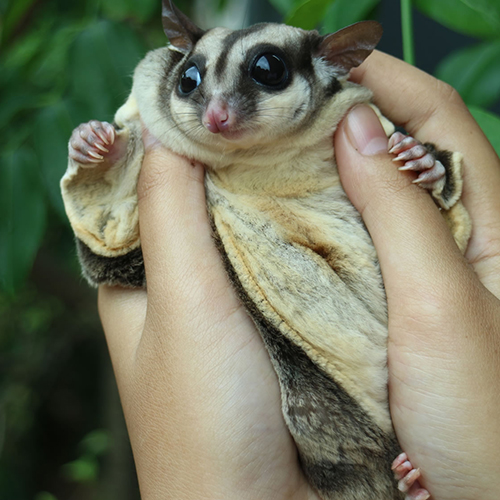
Image: Endangered Mahogany Glider. qtfn.org.au
THE SOUTHERN CASSOWARY
(Casuarius casuarius johnsonii)
The region’s namesake and arguably its most iconic species.
Mission Beach alone is home to an estimated – 100 resident wild cassowaries, making it one of the best places in the world to see them in the wild.
The landscape forms part of the largest contiguous lowland rainforest south of the Daintree, critical for cassowary movement and feeding.
Image: Liz Gallie
Top 10 Wildlife Experiences on the Cassowary Coast
1. Spot a Wild Southern Cassowary at Mission Beach
Mission Beach is home to around 100 resident wild cassowaries, making it the best place in Queensland to see them. Early mornings near rainforest edges or waterways offer the highest chance of sightings.
2. Walk the Dreaming Trail for Quiet Cassowary Encounters
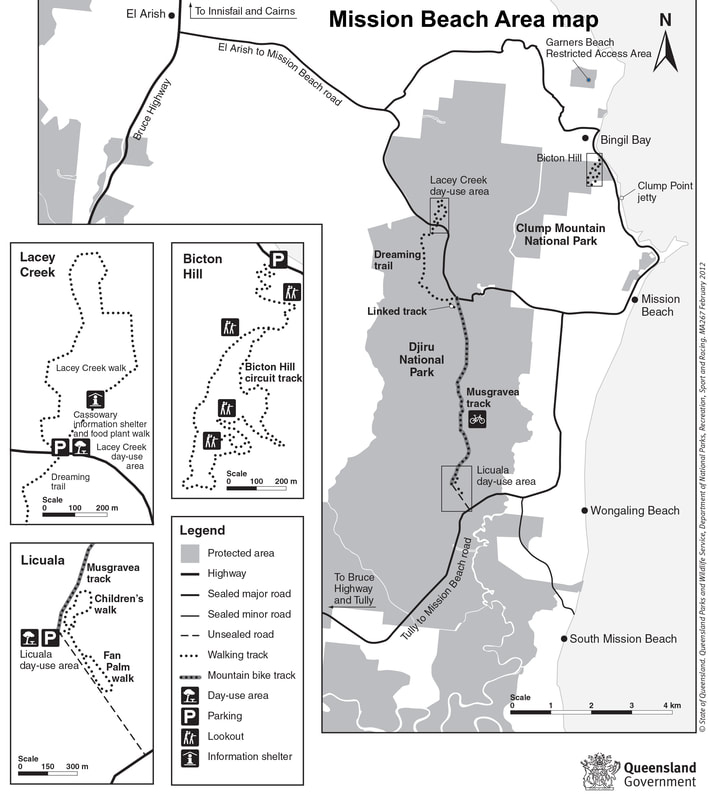
The 3km Dreaming Trail (El Arish–Mission Beach Road) winds through stunning lowlying rainforest and licuala palm groves—prime cassowary habitat for those who move quietly and patiently.
3. Explore Djiru National Park – Lowland Cassowary Habitat
Djiru National Park protects part of the largest contiguous rainforest south of the Daintree and is vital for the movement and feeding of the Southern Cassowary.
4. Visit Cassowary Connection Nature Refuge
A 24ha protected rainforest corridor that links the coast to Djiru National Park. It’s a unique place to walk quietly through pristine cassowary habitat while supporting conservation efforts.
5. Discover the Endangered Mahogany Glider
Wildlife Queensland’s Cassowary Coast–Hinchinbrook Branch runs habitat projects and monitoring for the mahogany glider, a rare nocturnal gliding possum found only in this region. Guided conservation activities offer a chance to learn about this highly threatened species.
6. Birdwatching Along the Coast – 345+ Species Recorded
The Cassowary Coast is a birding hotspot with recent checklists showing over 345 species, including Torresian ImperialPigeons, Rainbow Beeeaters, Ospreys, and Doubleeyed FigParrots. Top spots include Wongaling Beach, Etty Bay, and South Johnstone.
7. Rainforest Road Trip to Etty Bay
Etty Bay is known for cassowaries that wander the beach and rainforest edges—often visible near the campground. This scenic stop is highlighted as a quintessential Cassowary Coast wildlife experience.
8. Wet Tropics Wildlife: Tree Kangaroos, Platypus & Echidnas
Nearby Wet Tropics rainforest areas along the Cassowary Coast offer the chance to see tree kangaroos, duckbilled platypuses, and echidnas, all part of the region’s ancient fauna.
9. Explore Coastal and Marine Wildlife Habitats
Local conservation groups monitor and advocate for species such as dugongs, mangrove wildlife, and wetland birdlife. Guided coastal walks and estuary paddles offer opportunities to spot turtles, rays, and waterbirds.
10. Learn to “Live With Wildlife” – Local Conservation Programs
The Cassowary Coast Regional Council offers education programs about coexisting with native wildlife, wildlife friendly fencing, and responsible viewing. These programs deepen visitor understanding while supporting local fauna.
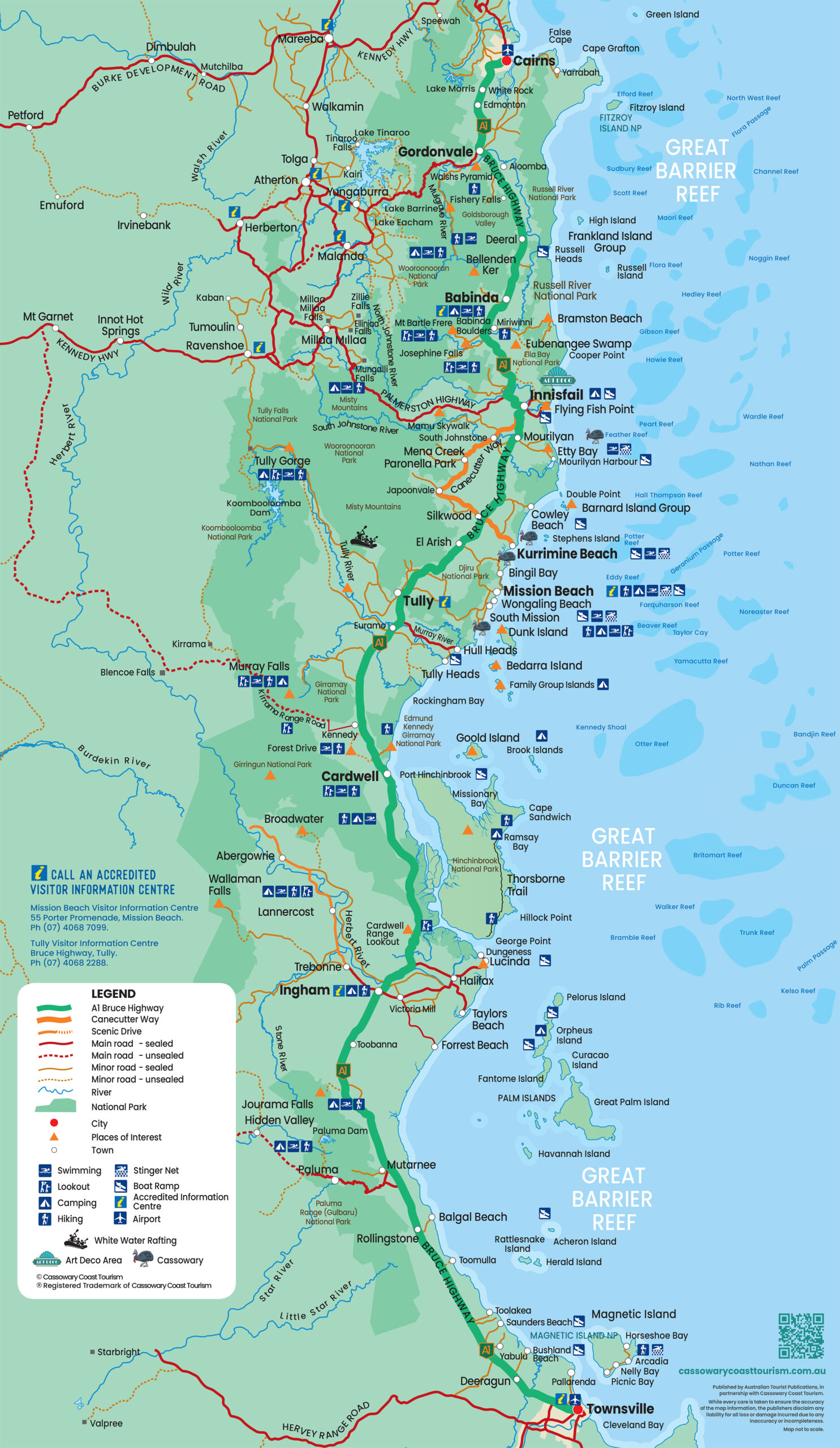
CASSOWARY COAST MAP